


How to Use Area Rugs to Define Zones in an Open Floor Plan Without Walls
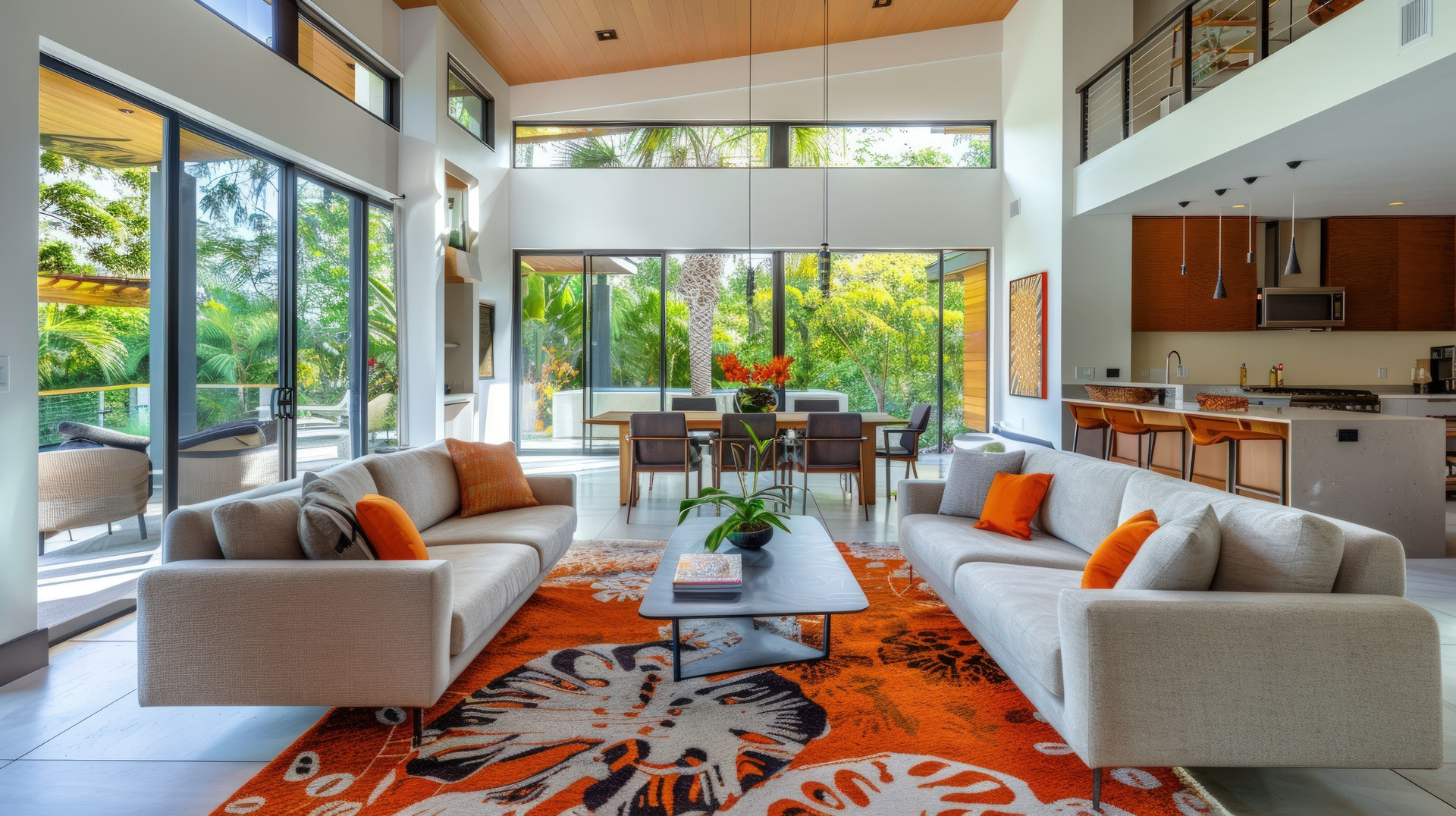
Open floor plans are one of the most popular features in Western New York homes right now, and it’s easy to see why. The living room flows into the dining room, the dining room bleeds into the kitchen, and suddenly the whole first floor feels bright, connected, and spacious. It’s a great look.
Until it isn’t.
Without walls to naturally separate your spaces, that beautiful openness can quickly start to feel like one big, undefined room. The sofa floats. The dining table seems like it could be anywhere. Nothing feels anchored. If you’ve ever walked into your own home and thought, “something feels off,” this is probably why.
Here’s the good news: you don’t need to knock down a single wall to fix it, and you don’t need a major renovation either. A well-placed area rug does the job beautifully.
Think of Each Rug as a “Room Within a Room”
The core idea is simple. Every distinct activity in an open floor plan deserves its own visual territory. Your living area is one zone. Your dining space is another. A reading nook or home office corner is a third. A rug planted under each of these spaces draws an invisible boundary on the floor that your eye immediately recognizes as intentional.
In a home in Tonawanda or Williamsville, where open-concept layouts are common in newer builds, this trick transforms a space without touching a single wall or spending weeks on a renovation. You’re not adding structure above your head; you’re adding it beneath your feet.
1. Size Matters More Than You Think
One of the most common mistakes homeowners make is choosing a rug that’s too small for the zone it’s meant to define. A petite rug shoved under just the coffee table doesn’t create a living zone; it creates a tiny island in the middle of nowhere.
The Rule: For a seating area, the rug should be large enough that at least the front legs of every piece of furniture rest on it. This pulls everything into the same “room” and makes the grouping feel intentional. For a dining zone, the rug should be wide enough that all chair legs stay on it even when chairs are pulled out from the table.
2. Use Contrast to Create Visual Separation
When your floors throughout are the same material, whether that’s hardwood, luxury vinyl, or laminate, a rug with a contrasting color or texture is what signals to the eye that one zone has ended and another has begun.
The Trick: You don’t need loud or clashing patterns. Even a subtle shift in texture from a smooth floor to a plush, high-pile rug is enough to communicate: “this is a different space now.” For bolder open-concept layouts, try two rugs with complementary patterns that clearly belong to the same design family, but are visually distinct enough to hold their own zones.
3. Let Pattern Do the Heavy Lifting in a Neutral Room
If your walls, ceilings, and floors are all working in a neutral palette, your rugs can be where the personality lives. A geometric pattern in the living area paired with a more subdued solid tone in the dining zone creates hierarchy and visual flow, without anything fighting for attention.
For flooring inspiration on how different flooring types and styles can complement rugs across zones, it helps to see rooms styled in real settings rather than guessing from a swatch.
4. Don’t Forget the “Buffer Zone”
Here’s something the design world doesn’t talk about enough: the space between rugs matters just as much as the rugs themselves. That exposed strip of flooring between your living room rug and your dining room rug is not “wasted space.” It’s the visual breather that makes both zones feel intentional rather than cluttered. Aim for at least 18 to 24 inches of breathing room between rugs in adjacent zones.
5. Layer When the Space Calls for It
In larger, more open layouts, like the kind you’ll find in some of the spacious homes around Orchard Park or Niagara Falls, a single rug per zone might feel underwhelming. This is where layering comes in. A larger, flat-weave rug as the base with a smaller, softer rug layered on top adds depth, warmth, and dimension. It also gives you room to play with texture, pattern, and color all at once.
The Bonus: Rugs Protect Your Investment, Too
Beyond the design function, rugs serve a practical role in open floor plans. High-traffic corridors in open homes, especially in entryways that flow straight into a living area, take a real beating over time. Placing a durable rug in those pathways reduces wear on your underlying hardwood or luxury vinyl flooring. In WNY winters, when salt-covered boots track in from outside in Jamestown or Olean, that protection is especially welcome.
Let Custom Carpet Centers Help You Pull It All Together
Ready to bring some order to your open floor plan without losing any of that openness you love? At Custom Carpet Centers, our flooring experts have been helping Western New York homeowners make smart, beautiful flooring decisions since 1965. Explore our wide selection of area rugs in Western New York and visit us in Orchard Park, Williamsville, Tonawanda, Niagara Falls, or Jamestown. In the Olean area? Let us come to you with our convenient shop at home service. Stop in, give us a call, or browse online today.