


Rift-Sawn vs. Quarter-Sawn Hardwood Flooring for WNY’s Seasonal Humidity Changes
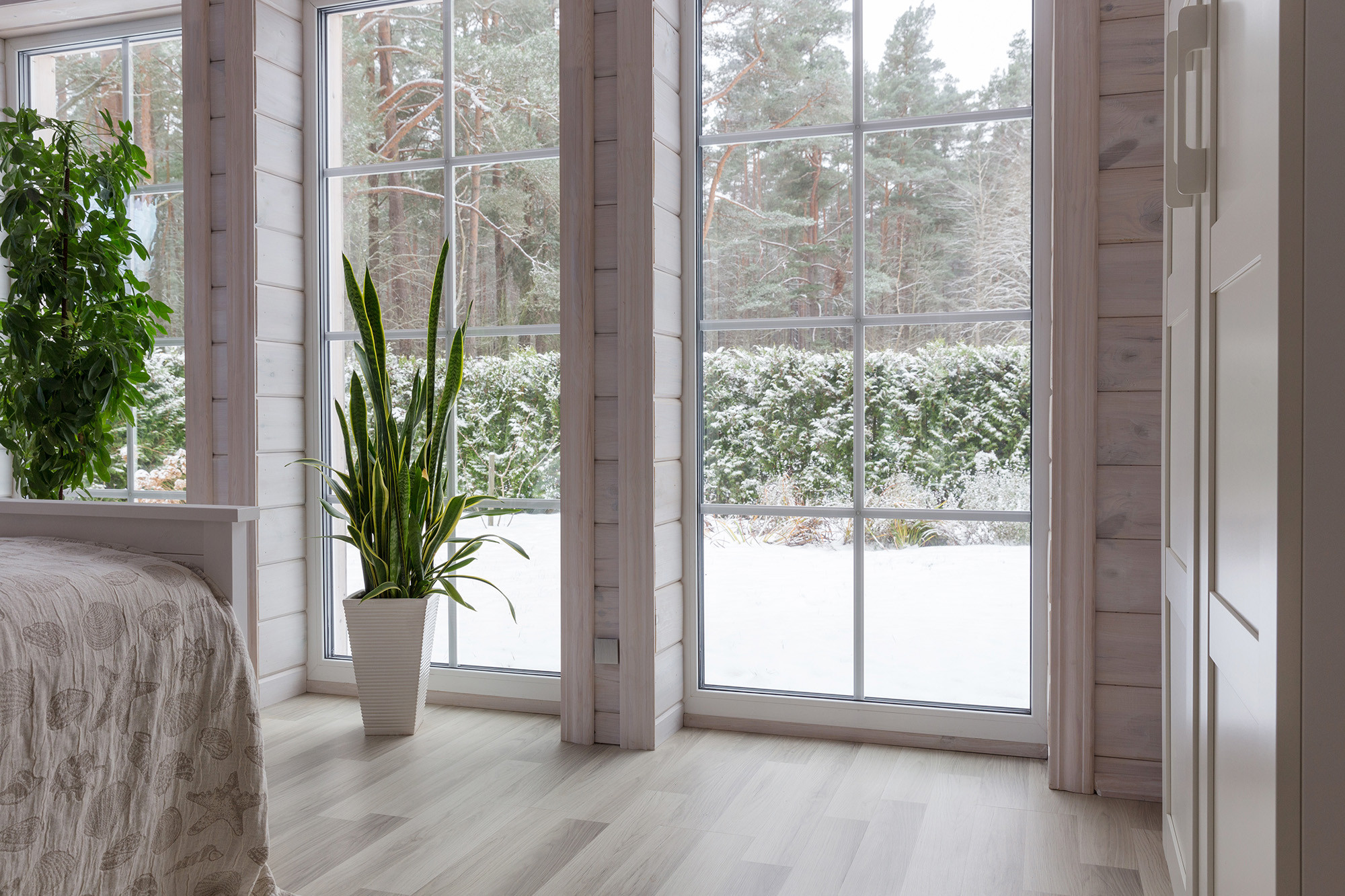 Seasonal humidity swings in Western New York cause hardwood floors to cup, crown, and gap because natural wood expands when it absorbs summer moisture and shrinks when winter heating dries out indoor air. In Western New York, outdoor relative humidity frequently surges above 75% in July and August, while indoor heating during chilly winter months can drive moisture levels down below 20%. Because standard plain-sawn floorboards expand across their width, these severe shifts put continuous mechanical strain on your floor.Hardwood is a hygroscopic material that stays in ongoing balance with the moisture in your home. When moisture levels rise, wood cell walls absorb airborne water vapor and swell. When moisture levels drop during long Buffalo winters, wood cells release water and contract. In standard floorboards, this movement creates three common structural headaches:
- Cupping: During humid summer months along Lake Erie and Lake Ontario, the underside of a plank absorbs moisture faster than the sealed top surface. This unbalanced swelling forces the plank edges upward, creating a concave shape with raised borders and a sunken center.
- Crowning: When the surface of a board absorbs excess water, or when cupped boards are sanded flat before the lumber dries out completely, the plank develops an arched, convex center once humidity returns to normal.
- Gapping: When your furnace runs day and night from late autumn through early spring, the dry air pulls moisture out of your floorboards. The planks shrink across their width, leaving noticeable cracks between boards that trap dirt, grit, and allergens.
Most builder-grade hardwood flooring is plain-sawn (also known as flat-sawn). In plain-sawn timber, the tree rings run horizontally across the face of the board at low angles between 0 and 30 degrees. This layout forces almost all natural wood movement to take place across the width of the plank, pushing boards tightly together during muggy summer afternoons and pulling them apart during freezing January nights in Tonawanda, Niagara Falls, and Orchard Park.
What Is Quarter-Sawn Hardwood Flooring?
Quarter-sawn hardwood flooring is lumber produced by first cutting a log lengthwise into four quarters, then sawing each quarter radially at a 60-degree to 90-degree angle to the annual growth rings. This specialized milling technique forces the wood grain to run vertically through the thickness of the board rather than horizontally across its surface, cutting seasonal width expansion by up to 50% compared to standard plain-sawn lumber.
Dimensional Stability and Medullary Ray Flecking
Because the growth rings in quarter-sawn planks stand nearly perpendicular to the surface of the floorboard, seasonal moisture absorption causes the board to expand in thickness (height) rather than in width. This vertical movement is virtually unnoticeable to the eye and will not crowd neighboring boards, pull joints apart, or buckle your floor.
In addition to exceptional structural performance, quarter-sawing reveals a distinctive visual characteristic known as medullary rays, ray flecks, or “tiger stripes.” Medullary rays are cellular ribbons that transported sap and nutrients horizontally through the living tree. When cut across their face during quarter-sawing, these cells create shimmering, reflective markings across the surface. This striking effect delivers authentic historic character, making quarter-sawn white oak and red oak a favorite for classic Craftsman, Mission, and traditional homes in Williamsville and Buffalo.
What Is Rift-Sawn Hardwood Flooring?
Rift-sawn hardwood flooring is lumber manufactured by cutting a log radially at a 30-degree to 60-degree angle (most commonly 45 degrees) to the growth rings, creating the straightest, most uniform linear grain pattern available in hardwood manufacturing. Rift-sawing intentionally avoids cutting through medullary rays, delivering the same superior dimensional stability as quarter-sawn lumber with a clean, contemporary visual profile.
Modern Architectural Consistency and Balance
While quarter-sawn planks highlight expressive ray flecks, rift-sawing isolates a smooth, tightly spaced linear pattern known as “pencil grain.”
Because rift-sawn planks maintain a vertical grain orientation, they deliver the exact same structural defense against Western New York humidity swings as quarter-sawn flooring. Your floorboards resist seasonal cupping, crowning, and gapping through every freezing winter and humid summer. If your design vision calls for Scandinavian minimalism, modern simplicity, or transitional cabinetry, rift-sawn hardwood provides uniform color and quiet architectural elegance without bold figuring.
Rift-Sawn vs. Quarter-Sawn Hardwood Flooring: At a Glance
When you evaluate rift-sawn and quarter-sawn hardwood for your living spaces, comparing grain orientation, stability, appearance, and value helps you identify the best match for your lifestyle:
| Performance Feature | Quarter-Sawn Hardwood | Rift-Sawn Hardwood |
|---|---|---|
| Surface Texture Profile | Pronounced medullary ray flecks, dynamic ribbons, and rich vintage character | Ultra-clean, tightly parallel pencil grain with zero ray flecking |
| Dimensional Stability | Exceptional; growth rings at 60 to 90 degrees direct swelling vertically | Exceptional; growth rings at 45 degrees deliver matching vertical stability |
| Seasonal Gap & Cupping Resistance | Reduces horizontal board shrinkage and expansion by up to 50% | Reduces horizontal board shrinkage and expansion by up to 50% |
| Sawmill Yield & Cost Profile | Moderate log yield; moderately higher cost than plain-sawn planks | Lowest log yield with highest waste; represents a premium investment |
| Interior Design Match | Craftsman, Mission, rustic revival, traditional, and historic preservation | Modern minimalist, Scandinavian, contemporary, and architectural spaces |
| Top Recommended Species | White Oak, Red Oak | White Oak, Red Oak, Ash |
Comparing Stability, Visual Style, and Project Budget
Both rift-sawn and quarter-sawn cuts deliver identical real-world defense against the shifting humidity of our region. Your decision comes down to three practical considerations:
- Aesthetic Style: Quarter-sawn planks add warmth, historic authenticity, and rich texture to living rooms, dining spaces, and historic renovations. Rift-sawn planks create sleek, understated sophistication that pairs seamlessly with modern kitchens, minimalist trim, and open layouts.
- Rift and Quartered Blends: Many manufacturers combine both cuts into a single run. This pairing provides total dimensional stability while balancing clean pencil lines with occasional medullary rays at an accessible price point.
- Lumber Yield and Cost: Rift-sawing requires the sawyer to turn the log after every single cut to maintain a precise 45-degree angle. This process generates triangular scrap lumber and takes more labor, making pure rift-sawn flooring a higher investment than quarter-sawn lumber.
How Can You Protect Hardwood Flooring from WNY Climate Swings?
While rift-sawn and quarter-sawn planks drastically minimize movement, consistent indoor climate care keeps your floors looking pristine for decades:
- Control Indoor Relative Humidity: Maintain indoor relative humidity levels between 35% and 55% year-round. Use central air conditioning or a dehumidifier during humid summer months, and run a whole-home or console humidifier once your furnace turns on for the winter.
- Prioritize Professional Acclimation: We never rush an installation. Our team ensures your new hardwood planks rest inside your home to reach moisture equilibrium with your living space before installation begins.
- Stop Winter Slush at Your Entryways: Lake-effect snow carries abrasive road salt, melting slush, and gritty dirt into your home. Place durable walk-off mats at exterior entry doors across Jamestown, Olean, and Buffalo to shield your hardwood finish.
Why Choose Custom Carpet Centers for Your Hardwood Flooring?
Since 1965, Custom Carpet Centers has helped you find the perfect flooring for local weather, busy households, and everyday living. Because we belong to the National Floorcovering Association (NFA), an elite trade group representing the top 1% of flooring dealers nationwide, we leverage exclusive buying power to bring you premier hardwood collections at exceptional values. Best of all, every installation we perform is backed by The Callahan Promise: total satisfaction guaranteed.
You can begin planning your renovation right from your couch by uploading a picture of your living space to our interactive Room Visualizer, or calculate your estimated material coverage in seconds with our online Flooring Estimator. When you want to see the difference between the delicate ray flecks of quarter-sawn boards and the linear pencil grain of rift-sawn planks in person, stop by any of our five Western New York showroom locations:
If you prefer to review finishes under your own household lighting, schedule our specialized Olean, NY Shop at Home service, and our design consultants will bring curated, full-size hardwood planks right to your living room. We proudly serve you across Buffalo, Orchard Park, Williamsville, Tonawanda, Niagara Falls, Jamestown, Olean, and all of Western New York. Book your showroom consultation or reserve your Shop at Home appointment today to discover hardwood floors engineered for authentic four-season living.