


Floating vs Glue Down vs Nail Down Installation Methods Explained
Choosing a beautiful hardwood or engineered floor is only part of the decision. The installation method underneath plays a major role in how that floor looks, feels, and performs for years to come. Floating, glue down, and nail down installations each serve a purpose, and the right choice depends on the material, the subfloor, and the goals for the space.
At Custom Carpet Centers, installation is never an afterthought. Professional flooring installation ensures the structure beneath the surface supports long-term durability, comfort, and stability.
Floating floors and the freedom to move
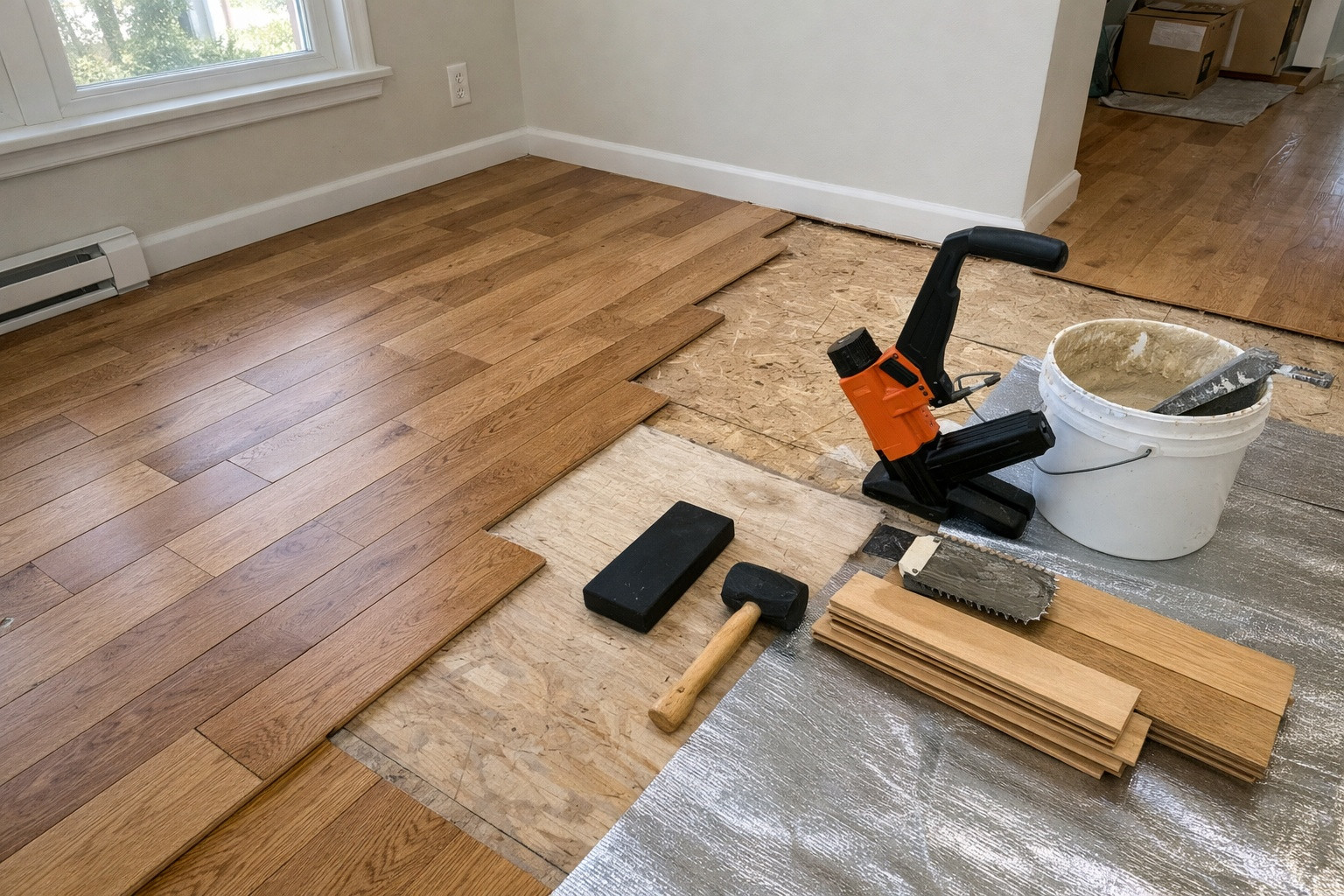
Floating installation has become increasingly popular, especially with engineered hardwood, laminate, and many luxury vinyl products. Instead of being attached directly to the subfloor, planks lock together and “float” above it.
This method is commonly used over:
- Concrete slabs
- Existing flooring (when appropriate)
- Subfloors where moisture control is important
Because the floor is not permanently fastened, it has room to expand and contract naturally with seasonal humidity changes — something especially relevant in Western New York’s shifting climate.
Floating systems are often quicker to install and can be more forgiving in multi-level homes or finished basements. When paired with high-quality underlayment, they can also provide sound absorption and a slightly softer feel underfoot.
However, floating floors rely heavily on proper subfloor preparation. Even small imperfections beneath the surface can translate into movement or noise over time. That is why experienced flooring experts carefully evaluate the condition of the subfloor before recommending this method.
Glue down installation and solid stability
Glue down installation offers a different kind of performance. In this method, planks are adhered directly to the subfloor using a specialized adhesive. It is commonly used for engineered hardwood and certain commercial flooring applications.
The result is a floor that feels extremely solid and stable underfoot. Because it is bonded directly to the surface below, there is minimal movement and less potential for hollow sounds.
Glue down is often recommended for:
- Concrete subfloors
- High-traffic areas
- Commercial flooring spaces
- Large, open layouts
In commercial environments such as offices or retail spaces in Niagara Falls or Tonawanda, glue down installation provides the durability and stability needed to withstand consistent foot traffic.
It does require careful adhesive selection and precise installation. Moisture levels must be tested, and working time with adhesive must be managed properly. When installed correctly, a glue down floor delivers long-term performance and a seamless feel.
Nail down installation and traditional craftsmanship
Nail down installation is the classic method associated with solid hardwood flooring. Planks are fastened directly to a wood subfloor using nails or staples, typically through the tongue of each board.
This method is ideal for:
- Solid hardwood flooring
- Plywood or OSB subfloors
- Homes where long-term permanence is desired
Nail down creates a firm, secure attachment that allows solid hardwood to expand and contract naturally while remaining anchored to the subfloor. It has been trusted for generations and remains a preferred method in many custom home builds throughout Orchard Park and Williamsville.
Because it requires a wood subfloor, nail down is not suitable for concrete without additional preparation. It also demands precision. Improper fastening can lead to squeaks, gaps, or uneven boards over time.
When handled by seasoned professionals, nail down installation provides the timeless feel and performance that solid hardwood is known for.
Comparing performance across real-world conditions
Each method has strengths that align with specific environments:
- Floating systems excel in versatility and adaptability.
- Glue down installations provide superior stability in high-traffic or commercial settings.
- Nail down installations support the long-term performance of traditional solid hardwood.
Moisture conditions, subfloor material, home structure, and even future remodeling plans all influence the best choice.
For example, a finished basement in Olean may benefit from a floating engineered floor with moisture mitigation, while a new custom build in Orchard Park may be ideal for nail down solid hardwood. A retail or office renovation may call for glue down installation for added durability.
The role of professional installation
The installation method is not simply a technical detail — it directly impacts warranty protection, long-term durability, and overall satisfaction.
Professional flooring installation includes:
- Subfloor inspection and leveling
- Moisture testing
- Proper underlayment or adhesive selection
- Precise fastening or locking techniques
- Clean transitions and finishing details
These steps ensure the finished floor not only looks exceptional but also performs exactly as expected for years to come.
Choosing the right approach for the space
There is no universal “best” installation method. The right choice depends on the flooring material, the structure of the home or commercial property, and long-term goals for the space.
Floating systems offer flexibility. Glue down installations deliver stability. Nail down methods provide classic craftsmanship. Each has a place when matched thoughtfully to the project.